Introduction
Social media has quietly changed the way we talk about emotions. Words that once carried depth—narcissist, trauma, depression, gaslighting—have now become casual reactions, punchlines, or quick labels for everyday discomfort.
But this shift has a deeper psychological effect.
According to the Sapir–Whorf Hypothesis (Linguistic Relativity), the language we repeatedly hear and use begins to shape the way we perceive reality.
(Sapir, E. (1929). The Status of Linguistics as a Science. Whorf, B. L. (1956). Language, Thought, and Reality.)
This means that when online spaces repeatedly misuse psychological terms, those terms begin shaping how people interpret their relationships, emotions, and identity.
If “trauma” gets used for embarrassment, then embarrassment feels like trauma.
If “narcissist” gets thrown around casually, then every selfish moment looks like a disorder.
If “depression” becomes shorthand for tiredness, real depression becomes invisible.
We don’t just consume content—we absorb its vocabulary.
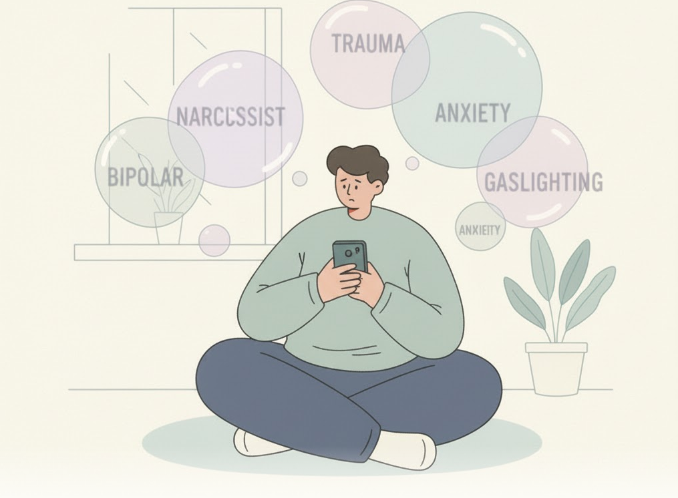
Why Mental Health Buzzwords Are Losing Their Meaning
1. When Everyday Flaws Turn Into Diagnoses
Not every difficult behavior is a disorder, but online, the line is blurred.
Clinical narcissism involves:
- Long-term behavior patterns
- Lack of empathy
- Instability in relationships
- Grandiosity covering deep insecurity
But online, the word is used for:
- someone who takes selfies
- someone who is confident
- someone who doesn’t respond immediately
When labels become casual, real struggles are minimized.
And everyday imperfections turn into pathology.
2. Relatable Content Isn’t Always Reliable Content
Relatable content spreads because it feels comforting, but it’s not always accurate.
A 10-second reel might say:
“Overthinking = anxiety.”
“Not texting back = toxic.”
“Disagreeing = gaslighting.”
Relatable content often:
- compresses complex concepts into one-liners
- generalizes subjective experiences
- dramatizes normal relationship issues
- teaches people to assume the worst
Relatable ≠ psychologically correct.
3. When Buzzwords Replace Emotional Literacy
Overuse of terms like “trauma,” “anxiety,” and “toxic” makes people lose emotional nuance.
Examples of mislabeling:
- Sadness being called depression
- Stress being called anxiety
- Discomfort being called trauma
- Disagreement being called gaslighting
People begin using labels instead of understanding emotions.
This feels like self-awareness—but it’s actually self-mislabeling.
4. Emotional Confusion: When Every Conflict Feels Dangerous
Constant exposure to buzzwords creates emotional hypervigilance.
People start to believe:
- every conflict is a red flag
- every boundary is abandonment
- every mistake is manipulation
- every imperfect person is toxic
This doesn’t build safety—it builds fear.
It makes relationships feel fragile and overly analyzed.
5. Why Overuse Isn’t Self-Awareness
True self-awareness is slow, reflective, and internal.
It requires asking:
- What am I truly feeling?
- Where is this feeling coming from?
- What patterns exist in my life?
- What’s the meaning behind this reaction?
Buzzwords skip the reflection part and jump straight to labeling.
Healing becomes reactive instead of thoughtful.
What People Absorb Without Realizing
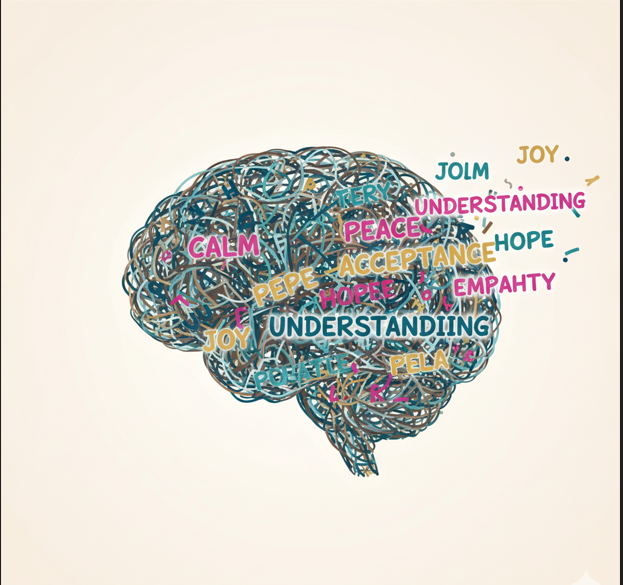
People unknowingly take in more than content—they absorb meanings:
1. Borrowed emotional language
They start describing emotions using someone else’s vocabulary.
2. Fear of normal behavior
Common mistakes look like emotional danger.
3. Self-doubt about identity
People wonder if they have disorders they don’t actually have.
4. Black-and-white thinking
Everything becomes either “healthy” or “toxic.”
5. Pressure to heal dramatically
Quiet, slow healing feels less valid.
How to Stay Grounded in a Buzzword-Heavy Digital World
- Ask if it’s a moment or a pattern.
Labels apply to patterns, not single events. - Separate discomfort from emotional damage.
Not all pain is trauma. - Remember: therapy is slow, social media is fast.
Real psychology has depth. - Use labels for clarity, not convenience.
Understanding > categorising. - Build emotional vocabulary offline.
Books, therapy, and self-reflection create real awareness.
Conclusion
Social media has made psychological language accessible, but also shallow.
Words meant for healing now appear as casual captions.
Overuse doesn’t deepen understanding—it distorts it.
To truly heal, we need to return to nuance:
honest emotions, accurate names, and gentle understanding.
Healing is not a label.
Healing is clarity.